Piper
The Legendary Piper J-3 Cub: How A Simple Taildragger Shaped Aviation History
The iconic spruce-and-fabric taildragger served as the initial trainer for four out of five American pilots who flew during the Second World War.
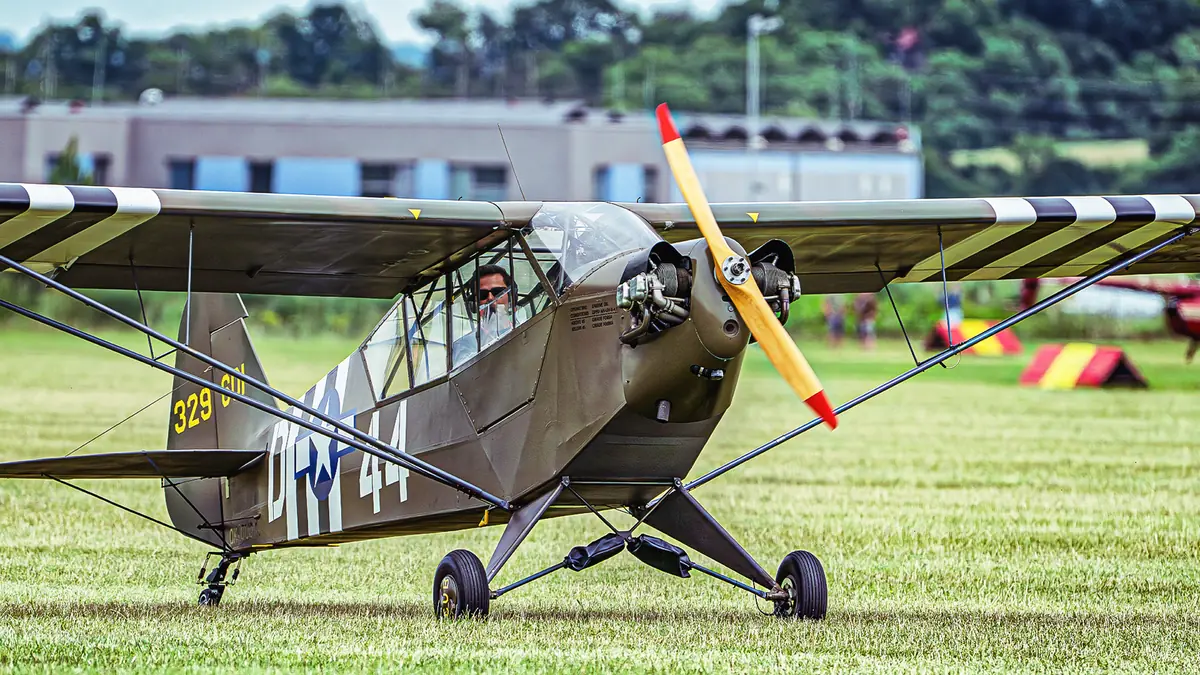
Historical analysis indicates that three-quarters of United States pilots who participated in WWII finished their flight instruction in the Piper J-3 Cub. The aircraft originated as the first model produced by the newly formed Piper Aircraft Corporation after its launch in 1938. Affordability made the low-cost design attractive to the civilian pilot training program, a government-sponsored initiative created to instruct college students in piloting aircraft. President Franklin Roosevelt introduced the initiative on December 27, 1938, with the goal of teaching 20,000 college participants annually, according to the Centennial of Flight Commission. A modest trial commenced early in 1939, while Plane and Pilot noted that the full-scale program launched that autumn.
Federal backing funded 72 hours of ground instruction alongside 35 to 50 hours of flight time for each student. Rules mandated that participating flight schools operate one aircraft for every 10 enrolled individuals, which helped expand domestic aerospace capabilities. Piper's factory located in Lock Haven, Pennsylvania, scaled up rapidly because the manufacturing process was heavily streamlined. Competitors such as the Waco UPF-7, Taylorcraft B, and Luscombe 8 captured only a quarter to half of the total market share. Brand-new examples of the Piper J-3 Cub sold for roughly $1,000 to $1,300 during the late 1930s.
As hostilities grew increasingly inevitable, Capitol Hill directed substantial funding toward the production lines. Peak wartime manufacturing saw a completed Cub emerge from the factory every 20 minutes under the military designation L-4 Grasshopper. The Department of Defense selected the aircraft due to its forgiving flight dynamics and minimal construction expenses. According to the National Museum of the US Air Force, the Army Air Corps initially ordered the platform as the O-59 in 1941 for observation and liaison duties before redesignating it as the L-4. Transforming the trainer into a military variant involved applying olive drab paint across nearly the entire airframe.
Military operations utilized the type for coastal reconnaissance patrols, alongside critical support roles for programs involving the Tuskegee Airmen and the WASP ferry service operated by women. Air and Space Magazine described the engineering behind the machine, noting that its lightweight structure and large wing created a glider-like feel that permitted touchdowns at speeds below 40 mph, or 64 km/h. Power was supplied by small piston engines producing between 40 and 90 horsepower, equivalent to 30 to 67 kW, depending on the specific variant. By comparison, the primary military trainer of the era, the Stearman, weighed nearly a ton empty and used an engine exceeding 200 horsepower, or 149 kW. Tuskegee Airman Roscoe Brown observed that the narrow landing gear required careful handling to prevent a ground loop, a sudden rotational swing during touchdown capable of causing airframe damage.
Efficiency was a hallmark of the 65-horsepower Continental engine, which consumed only about 4 to 5 gallons of fuel hourly. This efficiency allowed flight schools to maintain continuous training operations at a fraction of the cost required by heavier military aircraft. Plentiful parts and airframes ensured that training pipelines never stalled due to equipment shortages. When wartime production wound down in 1947, the factory had turned out approximately 19,000 to 20,000 units.
Before 1939, aviation was largely dominated by wealthy hobbyists and the military elite, keeping access to airfields and licenses nearly impossible for women and minorities. By reducing complexity and expense, the aircraft helped break down gender and racial barriers, creating a vast talent pool that supported the post-war commercial aviation expansion. Alabama's Tuskegee Institute served as a primary training site that established the first group of Black aviators. Simultaneously, the program provided over 2,500 women with federally funded flight instruction in the tandem cockpit, forming the foundation of the Women Air Force Service Pilots who ferried aircraft, towed targets, and tested equipment.
PlaneFile currently lists 17 Piper J-3 Cub aircraft for sale.
Sources: Simple Flying