Fuel
Refinery Economics Can Create Silent Avgas Supply Shortages Without Warning
Shifting profit margins can cause refiners to skip scheduled avgas batches, leading to unexpected supply shortages.
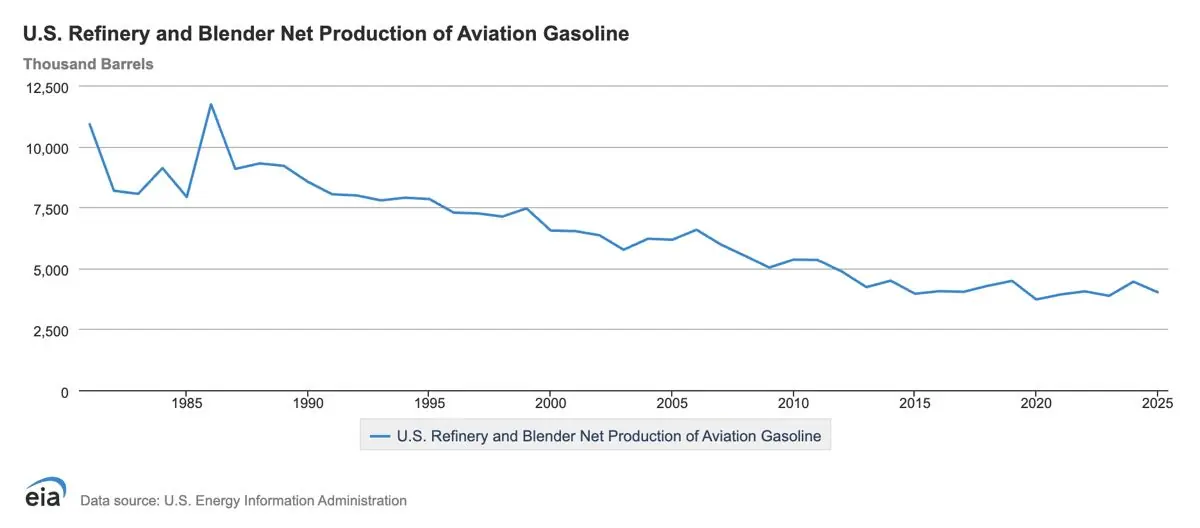
According to General Aviation News, an October 15, 2026, publication by Ben Sclair directed attention toward a discussion originally shared by Garrett Gleim on the Gleim Aviation website on October 2, 2026. The commentary highlights how aviation gasoline is manufactured in scheduled batches rather than through continuous, round-the-clock production runs.
While avgas is sold at a higher price than motor gasoline at the refinery gate, this markup is required to cover specialized handling, dedicated tankage, a batch-certification process, and product liability. Because standard gasoline profit margins are typically narrow, a modest widening of automotive gasoline profitability can shift the economic math.
When this happens, refiners may determine that a barrel of alkylate generates more value remaining inside the mogas pool than being diverted into a specialty product that makes up a tiny fraction of overall refinery output.
Because avgas undergoes blending and discrete certification runs rather than continuous output, a refiner can choose simply not to schedule the next production campaign if the crack spread indicates unfavorable timing.
This process occurs without any public announcement, press release, or prominent news coverage. The skipped batch remains unnoticed until storage tanks further down the distribution chain begin to run low.
The discussion also defined a crack spread as the difference between the cost of crude oil and the market value of the finished products refined from that barrel of oil. Gleim included a chart spanning from 2005 to 2025, while the General Aviation News version incorporated data from the U.S. Energy Information Administration reaching back to 1981.
Sources: General Aviation News