Regulation
AOPA Foundation Awards Record Scholarships While Falcon Field Secures FAA Grants
The AOPA Foundation announced historic scholarship awards while Falcon Field Airport in Mesa, Arizona, secured significant federal infrastructure funding.
The Aircraft Owners and Pilots Association revealed that the AOPA Foundation distributed upwards of $2.2 million in scholarships throughout 2026. This total represents the largest financial disbursement in the history of the Foundation, carrying an average award value of $6,500. A portion of this funding, exceeding $1.3 million, comes with backing from the Ray Foundation and targets 115 high school teachers and students. Each of these particular recipients receives $12,000 to apply toward private pilot certificate training.
Aside from the high school grants, the Foundation provides additional financial support designated for sport, private, commercial, or flight instructor certificates, along with instrument or multiengine ratings. Non-flying aviation pursuits such as flight dispatcher or mechanic training are also covered. AOPA Foundation Senior Vice President Elizabeth Tennyson noted that donors passionate about aviation fund these opportunities to invest in others. High school students can hold free AOPA memberships, which serve as a prerequisite alongside scholarship-specific criteria for applicants.
Modifications to the application process now feature two distinct application windows annually instead of a single period. The initial window spans from April to June, while the second runs from October to December. Taz Thomas, who serves as the Senior Manager for the AOPA Foundation Scholarship Program, explained that spreading the distribution helps applicants start earning new ratings without long waits and allows a quicker reapplication opportunity if unsuccessful initially. The current application window opened on October 1 and concludes on December 31. Operating as a 501(c)(3) charitable organization, the Foundation relies entirely on donations rather than member dues.
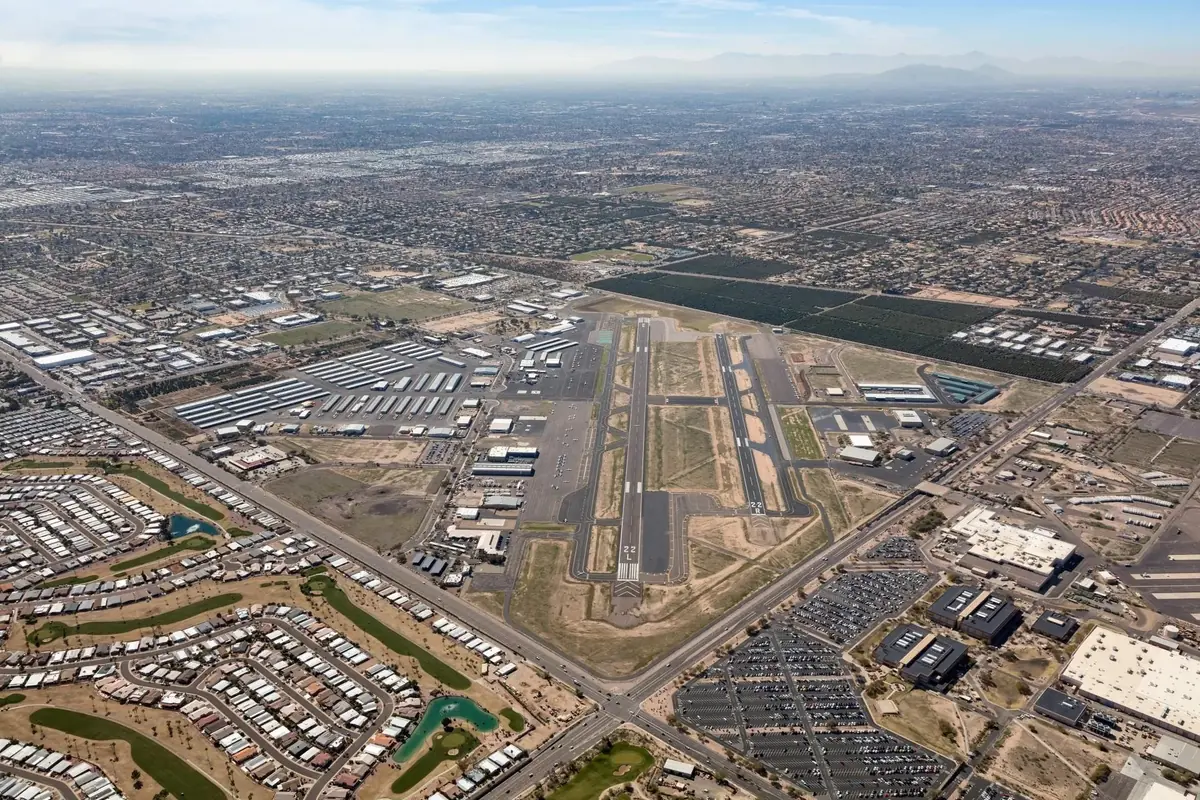
In separate aviation infrastructure news, Falcon Field Airport in Mesa, Arizona, obtained over $1.7 million through Federal Aviation Administration grants for fiscal year 2026-27. City officials announced Wednesday that the money will back taxiway construction, surface-safety equipment installation, and road improvements. An amount exceeding $819,000 is earmarked to rebuild the West Airport Service Road, linking facilities situated on opposite airfield sides. Furthermore, $823,243 will pay for constructing a fresh taxiway connection close to Runway 22L, establishing a pathway between Taxiway D and an existing aircraft parking ramp.
The taxiway project will additionally ready the zone for an eventual holding bay intended for pilot preflight run-ups, though building it necessitates further funds. Both initiatives secured design grants previously in 2025. Mark Gibbs, the Falcon Field Airport Projects and Operations Manager, remarked on the earlier funding in September 2025 that these design efforts establish a foundation for safe and efficient airfield operations.
An allocation of $67,742 will fund 12 Vehicle Movement Area Transmitters designated for Mesa Fire and Medical Department and airport vehicles. Air traffic controllers will utilize this technology to track and identify equipped vehicles near taxiways and runways, supplementing surface surveillance tools put in place at Falcon Field during 2025. Falcon Field ranked among early general aviation airports chosen for the Surface Awareness Initiative of the FAA, which completed its 100th installation in September. Concurrently, Mesa is weighing revised landing fees addressing operating expenses and deferred maintenance.
FAA Administrator Bryan Bedford emphasized in a May statement concerning the wider equipment program that Vehicle Movement Area Transmitters mitigate dangerous runway incidents and close visibility gaps. Bedford added that accelerating this deployment demonstrates a commitment to proactive safety enhancements and aviation community collaboration.