Regulation
AOPA Asks FAA to Reconsider Rescinding Single-Pilot Citation Exemptions
The Aircraft Owners and Pilots Association has formally requested that the Federal Aviation Administration pause its recent directive withdrawing single-pilot authorizations for multiple Cessna Citation jet variants.
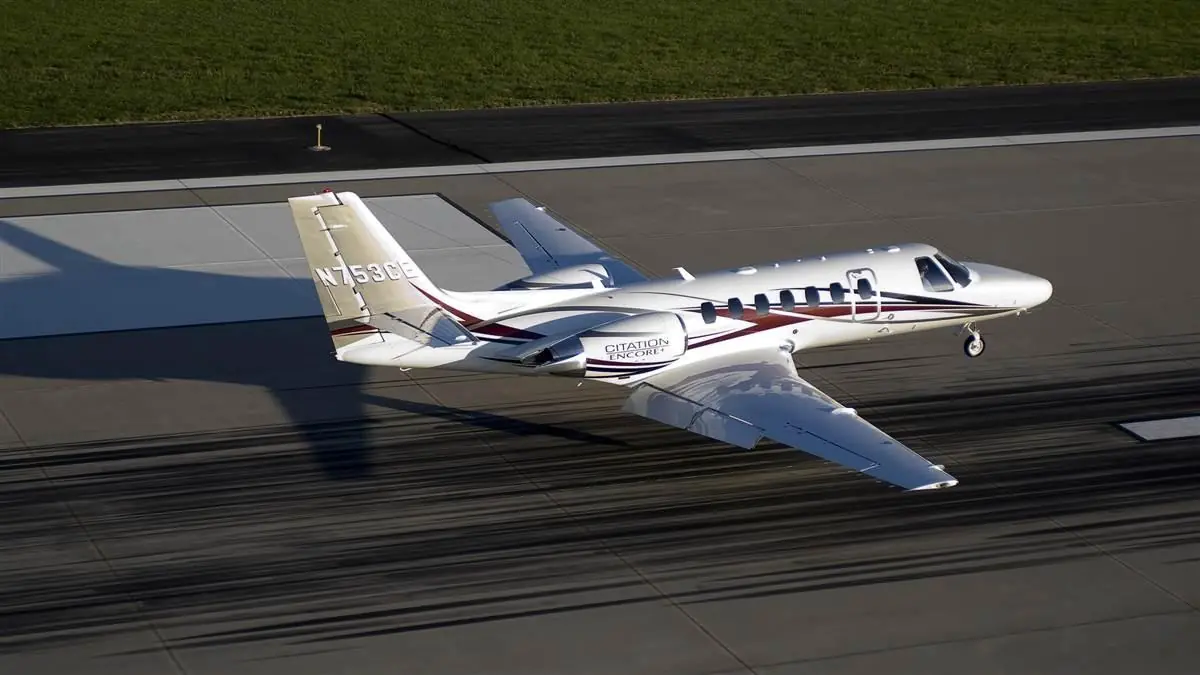
The Aircraft Owners and Pilots Association sent correspondence to Federal Aviation Administration Administrator Bryan Bedford asking the agency to reverse its choice to cancel single-pilot authorizations for several widely used Cessna Citation types. These particular aircraft have frequently been operated by single pilots since the middle of the 1980s. The federal agency published this decision via a Federal Register notice, which became active on September 29.
While these specific jets received original FAA Part 25 certification requiring two-pilot flight decks, the administration has issued single-pilot authorizations for them continuously since 1984. This regulatory shift follows two prominent accidents. On December 18, 2025, a Cessna 550 Citation II went down in Statesville, North Carolina, resulting in seven fatalities, including aircraft owner and former NASCAR driver Greg Biffle. Investigators noted that the flight was handled by a retired airline pilot lacking the necessary single-pilot authorization, and the right seat lacked a second required qualified crew member. An earlier high-profile incident occurred on May 22, 2025, when a Citation 550 crashed in San Diego at 3:47 a.m. amid heavy fog following an overnight journey originating on the East Coast.
Although the National Transportation Safety Board has not yet released final investigative findings for either tragedy, the administration stated its review of single-pilot authorizations began in 2024. The agency reported discovering numerous compliance failures regarding the established conditions and limitations of these authorizations, alongside a significantly elevated accident rate for single-pilot operations compared to two-pilot crews over the preceding 18 years.
In the communication addressed to the administrator, David Boulter, who serves as AOPA Vice President of Regulatory Affairs, stated that while the organization supports the agency's authority under its safety management system and aviation safety mandate, the blanket approach is problematic. Boulter remarked that it makes no sense to penalize compliant and safe operators through this directive, noting that grouping authorized operators who exceed requirements together with non-compliant parties fails to advance the safety mission.
The association requested an immediate halt to the complete denial of these authorizations, suggesting instead that the agency revoke privileges strictly for operators failing to meet the minimum standards outlined in the exemption framework. Furthermore, the organization encouraged the administration to collaborate with industry stakeholders to formulate recommendations for improving safety collectively.
Boulter also remarked that the purpose of contemporary safety systems is tracking operations and utilizing gathered data to drive continuous safety improvements, arguing that operational deficiencies should have been caught and addressed long before implementing such drastic measures without industry cooperation. The AOPA Air Safety Institute likewise questioned the administration's conclusions. Robert Geske, senior manager of safety analysis, pointed out that while the agency holds the authority to grant and revoke self-examination privileges, exercising oversight to correct ongoing noncompliance remains the agency's duty. The safety institute indicated it is still working to duplicate the administration's findings while questioning the pivot toward a blanket prohibition given that numerous operators fly accident-free while routinely exceeding minimum standards.
Training facilities such as FlightSafety International and Loft have historically provided dedicated single-pilot training programs enabling pilots to fly these business jets independently. Copilots in these operations must maintain either an aircraft type rating or a second-in-command qualification. The recent federal action leaves unaffected the single-pilot operations of the Citation 501 and 551, as well as the CE-525 series encompassing the CJ1, M2, CJ2, CJ3, CJ3+, and CJ4, because those models received initial certification as single-pilot aircraft.