General aviation
AOPA And Aviation Groups Challenge Proposed Mesa Falcon Field Landing Fees
Aviation organizations and local flight schools are pushing back against a revised landing fee proposal at Falcon Field Airport in Mesa, Arizona.
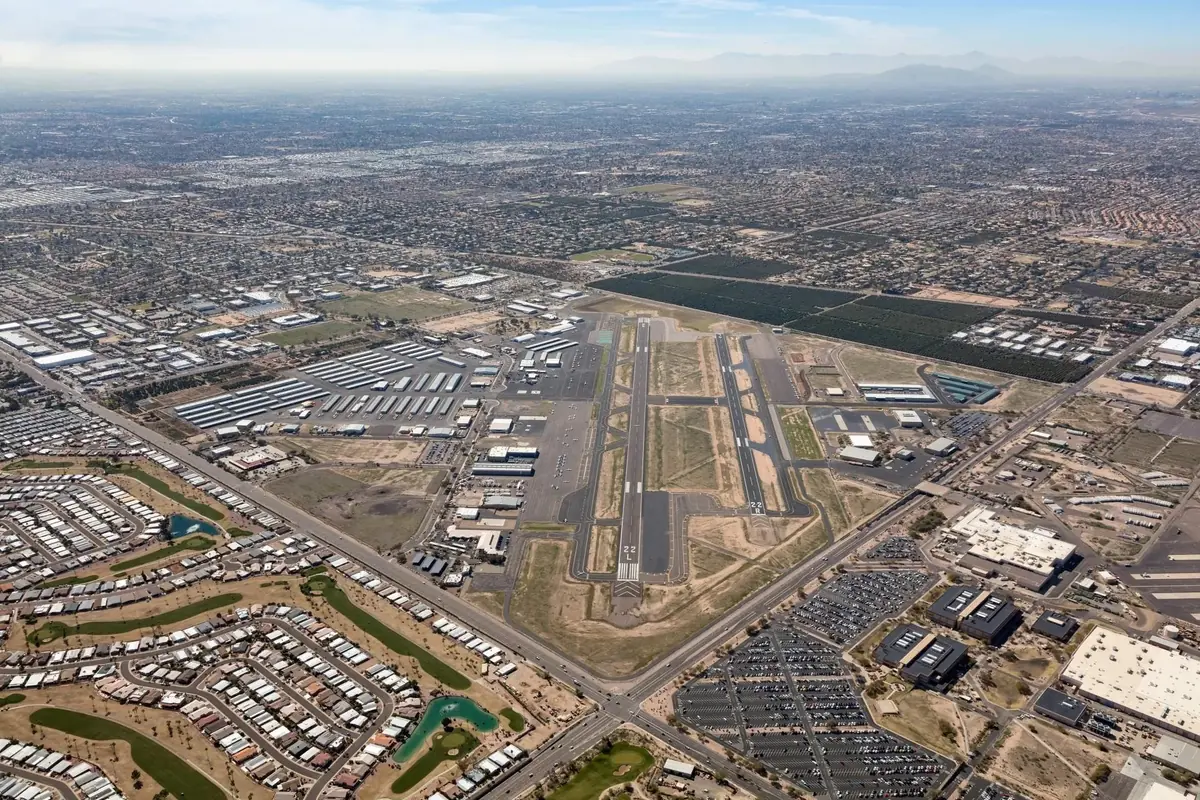
The city of Mesa has introduced a revised landing fee schedule for the airport following legal scrutiny and federal litigation. Under the newly proposed structure, aircraft owners would be billed $4.14 per 1,000 pounds of their aircraft maximum landing weight. For a typical aircraft weighing 2,500 pounds, such as a Cessna 172 or Piper Archer, this equates to $10.35 per landing. The plan also includes exemptions for aircraft under 1,000 pounds, as well as for emergency, public safety, medical, federal, and military operations.
This latest schedule replaces an earlier fee plan approved by the Mesa City Council in March, which has been on hold. The previous structure would have charged based aircraft weighing 6,000 pounds or less $20.35 per landing after an initial allowance of 10 free landings each month, while transient aircraft of the same size would have been billed $24.35 per landing. The updated proposal removes the distinction between based and transient aircraft and appears to eliminate the monthly free landing allowance for local operators.
Mesa officials state that the fee adjustments are required to cover mounting operating expenses and deferred maintenance, noting that net airfield costs for the upcoming fiscal year are projected at approximately $2.6 million, while the new fees are anticipated to bring in about $2.5 million annually. The city points out that funds from a previous airport land sale in 2006 are running out. The changes come after the city engaged the aviation law firm Anderson & Kreiger LLP to examine the fee structure following a federal lawsuit initiated by flight schools CAE Aviation Academy and Thrust Flight.
Despite the underlying litigation remaining active, a federal judge previously denied the flight schools request for a preliminary injunction. The FAA has also stepped in, receiving at least four Part 13 complaints and launching an ongoing investigation. In an April letter to city officials, the agency noted that using landing fees to restrict operations or specific types of operations is impermissible. The FAA previously asked for a delay in implementation during its review.
The Aircraft Owners and Pilots Association, joined by the Arizona Pilots Association and the Aviation Safety Advisory Group of Arizona, submitted letters arguing that the city has failed to provide adequate financial justification. The groups contend that the fees look like an effort to curtail flight training and manage noise levels rather than solve budget shortfalls, and they claim the city meetings did not meet federal requirements. They have asked the FAA to declare the city in breach of federal grant obligations, request financial documentation, and potentially initiate a formal Part 16 enforcement action if the city refuses to withdraw the fees.
AOPA General Counsel Fernando Campoamor criticized the city for failing to publish the detailed data alleged to support the charges and for removing exemptions for based aircraft without addressing past concerns. The revised fee schedule is subject to a 60-day public notice period alongside further consultations with airport users, and the Mesa City Council is scheduled to consider the proposal on December 8.